

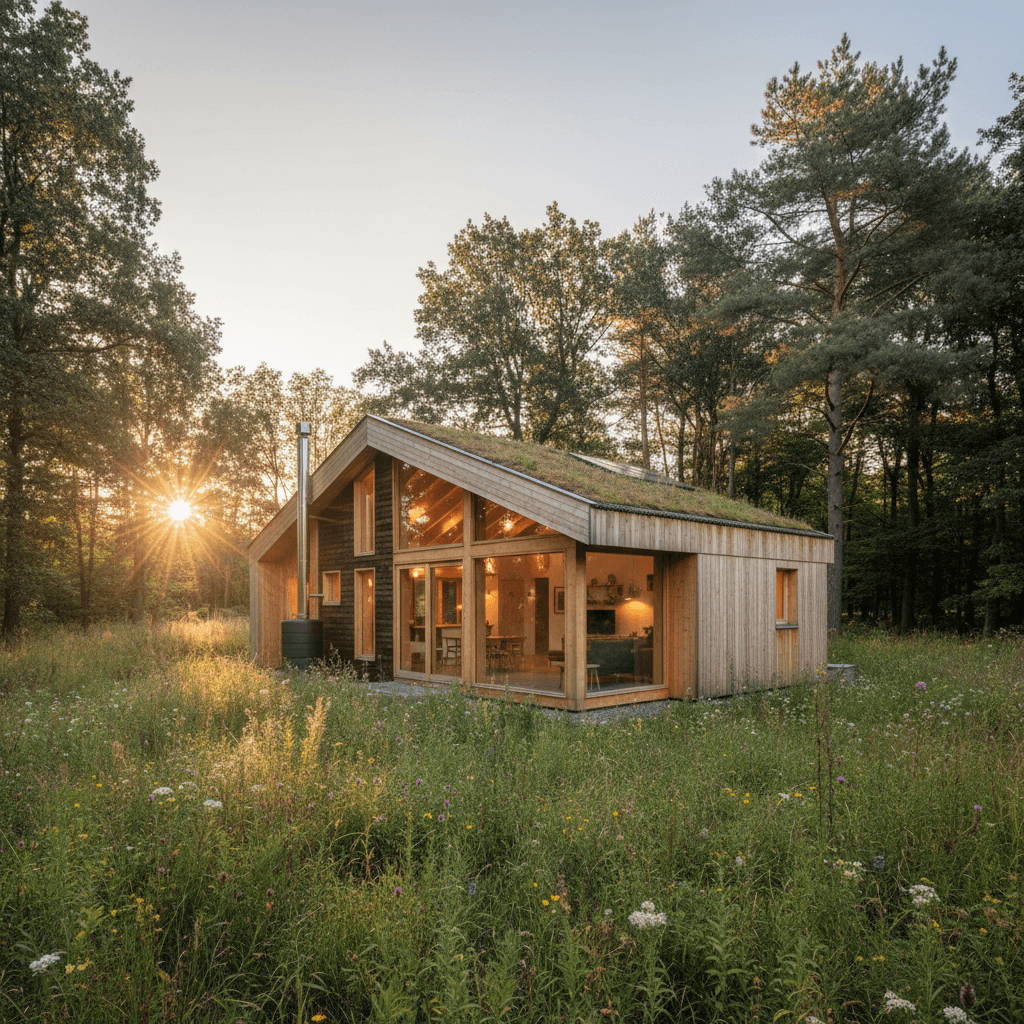
Energy Efficiency of Timber Homes
Compare thermal performance across different wall systems. Make informed decisions about your home's energy efficiency with our comprehensive calculator and expert guidance.
Why Energy Efficiency Matters
Investing in proper insulation and thermal performance pays off
Lower Energy Bills
Reduce heating and cooling costs by up to 60% with proper insulation and thermal envelope design.
Environmental Impact
Lower carbon footprint and reduced environmental impact through efficient energy usage and natural materials.
Comfort All Year
Maintain consistent indoor temperatures and humidity levels for superior living comfort in any season.
Property Value
Energy-efficient homes command higher resale values and are more attractive to modern buyers.
Building Standards
Meet or exceed current building regulations and prepare for future energy efficiency requirements.
Smart Technology
Compatible with smart home systems and renewable energy solutions like solar panels and heat pumps.
Energy efficiency calculator
Select wall material and thickness to see approximate U-value (heat loss per m²).
Note: Values shown are approximate and intended for comparison only. Final thermal performance depends on wall assembly, insulation, climate zone, and building design.
Result
Qualitative insulation level
How to use the calculator
Follow these steps to interpret U-values and compare options for your project.
Choose a wall material
Select the wall technology that best matches your planned house: timber frame, solid log, round log or CLT.
Select a typical thickness
Pick one of the suggested wall thicknesses commonly used for that material in residential buildings.
Look at the U-value
Lower U-value means less heat loss through 1 m² of wall per degree of temperature difference.
Check the qualitative scale
Use the Low / Medium / Better scale to quickly see where your option sits compared to typical solutions.
Use as a comparison tool only
Treat the results as indicative. For building code, energy certificates or detailed design, request project-specific calculations.
Indicative comparison of wall options
Example combinations of wall material and thickness with approximate U-values for quick comparison.
| Wall option | Thickness | Approx. U-value, W/m²·K | Indicative level |
|---|---|---|---|
| Timber frame with insulation, 200 mm | 200 mm | 0.59 | ◑ Medium |
| Profiled timber wall, 200 mm | 200 mm | 0.59 | ◑ Medium |
| Glued laminated timber wall, 200 mm | 200 mm | 0.59 | ◑ Medium |
| Log house (round log), 200 mm | 200 mm | 0.59 | ◑ Medium |
| Handcrafted log house (wild/rubbed log), 200 mm | 200 mm | 0.59 | ◑ Medium |
| CLT wall, 200 mm | 200 mm | 0.54 | ◑ Medium |
Note: These values are indicative and simplified. Real U-values depend on full layer build-up, insulation type, air tightness and detailing.
Energy efficiency FAQ
Answers to common questions about U-values and using this calculator.